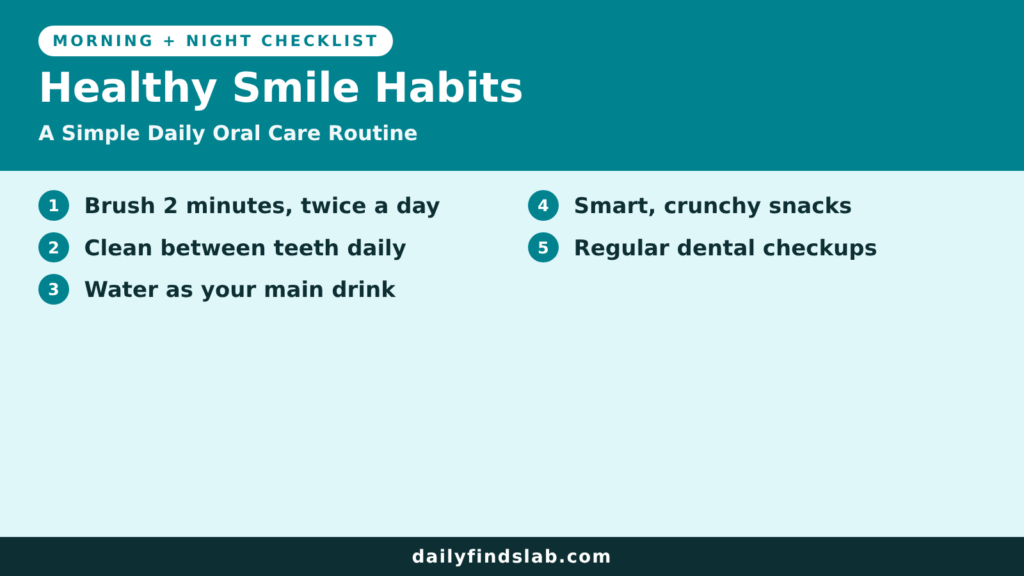
A healthy smile is mostly built from small, boring habits you repeat every day. There is no secret trick: brushing well, cleaning between your teeth, drinking water, being smart about snacks and seeing your dentist regularly do most of the work. The hard part is making those habits easy enough that you actually keep them on busy mornings and tired nights.
This guide turns the basics into a simple daily oral care routine you can follow at home. You’ll find a morning checklist, a night checklist, a food-first grocery list, and answers to common questions. Print it, save it to Pinterest, or keep it on your phone as a reminder.
This article is general information, not dental or medical advice. If you have pain, bleeding, sensitivity or any concern about your teeth or gums, talk to your dentist.
Why a Simple Routine Beats a Complicated One
Most people already know they “should” brush and floss. What gets in the way is friction: the floss is in a drawer, you’re rushing out the door, or you’re too tired at 11 PM. A routine works when each step is short, obvious and attached to something you already do, like making coffee or washing your face.
Think of it like meal prep for your mouth. Set up your space once, then let the habits run on autopilot:
- Keep your toothbrush, fluoride toothpaste and floss (or floss picks) together where you can see them.
- Put a refillable water bottle somewhere obvious, such as your desk or car.
- Set a two-minute timer on your phone or use a toothbrush with a built-in timer.
- Add a recurring reminder for your next dental cleaning.
Your 5-Minute Morning Smile Routine
Mornings are rushed, so this checklist is designed to fit around breakfast and coffee.
- Drink a glass of water first. It rinses your mouth after the night and is an easy habit to stack with your first coffee.
- Brush for two full minutes with fluoride toothpaste. Use a soft-bristled brush and gentle, small circles. Hard scrubbing isn’t better.
- Brush along the gumline and the backs of your teeth. These are the spots most people rush past.
- Clean your tongue. A quick brush or tongue scraper helps your mouth feel fresher.
- Spit, don’t rinse right away. Many dentists suggest leaving a thin layer of toothpaste on your teeth instead of rinsing it all off immediately.
- Sip coffee or tea with a glass of water alongside. Alternating sips is a simple way to rinse between cups.
If you like to brush after breakfast, that’s fine too. Some people prefer brushing before eating, especially before acidic foods or drinks like citrus juice, so they aren’t brushing right after acid exposure. Ask your dentist which timing suits you.
Your 5-Minute Night Smile Routine
The night routine matters most, because it removes the food and plaque from the whole day before you sleep.
- Finish eating and drinking (except water) before you brush. A late snack after brushing undoes the clean.
- Floss or use interdental brushes. Cleaning between teeth once a day reaches spots your brush can’t. Floss picks or a water flosser are fine if they make you more consistent.
- Brush for two minutes with fluoride toothpaste. Same technique as the morning: gentle, thorough, gumline included.
- Use mouthwash only if your dentist recommends it. It can be a nice extra, but it doesn’t replace brushing and flossing.
- Put your toothbrush somewhere it can air-dry. Replace it about every three months, or sooner if the bristles look frayed.
Tip: if flossing keeps getting skipped, move it earlier. Floss while watching TV or right after dinner, then brushing before bed feels like the easy last step.
Food-First Habits for a Healthier Smile
What you eat and how often you snack affects your teeth. You don’t need a special diet. Small swaps help:
- Choose water as your main drink. Tap water in many US areas also contains fluoride.
- Keep sweets with meals instead of grazing. Frequent sugary snacks throughout the day keep teeth exposed to sugar for longer.
- Snack on crunchy vegetables. Carrots, celery, cucumbers and snap peas are filling and need lots of chewing.
- Add dairy or fortified alternatives. Cheese, plain yogurt and milk are easy sources of calcium.
- Go easy on sticky foods. Dried fruit, gummies and caramel cling to teeth, so rinse with water afterward.
- Use a straw for soda or iced coffee drinks if you have them, and don’t sip them slowly for hours.
- Chew sugar-free gum after meals when you can’t brush. Look for gum with the ADA Seal.
Smile-Friendly Grocery List
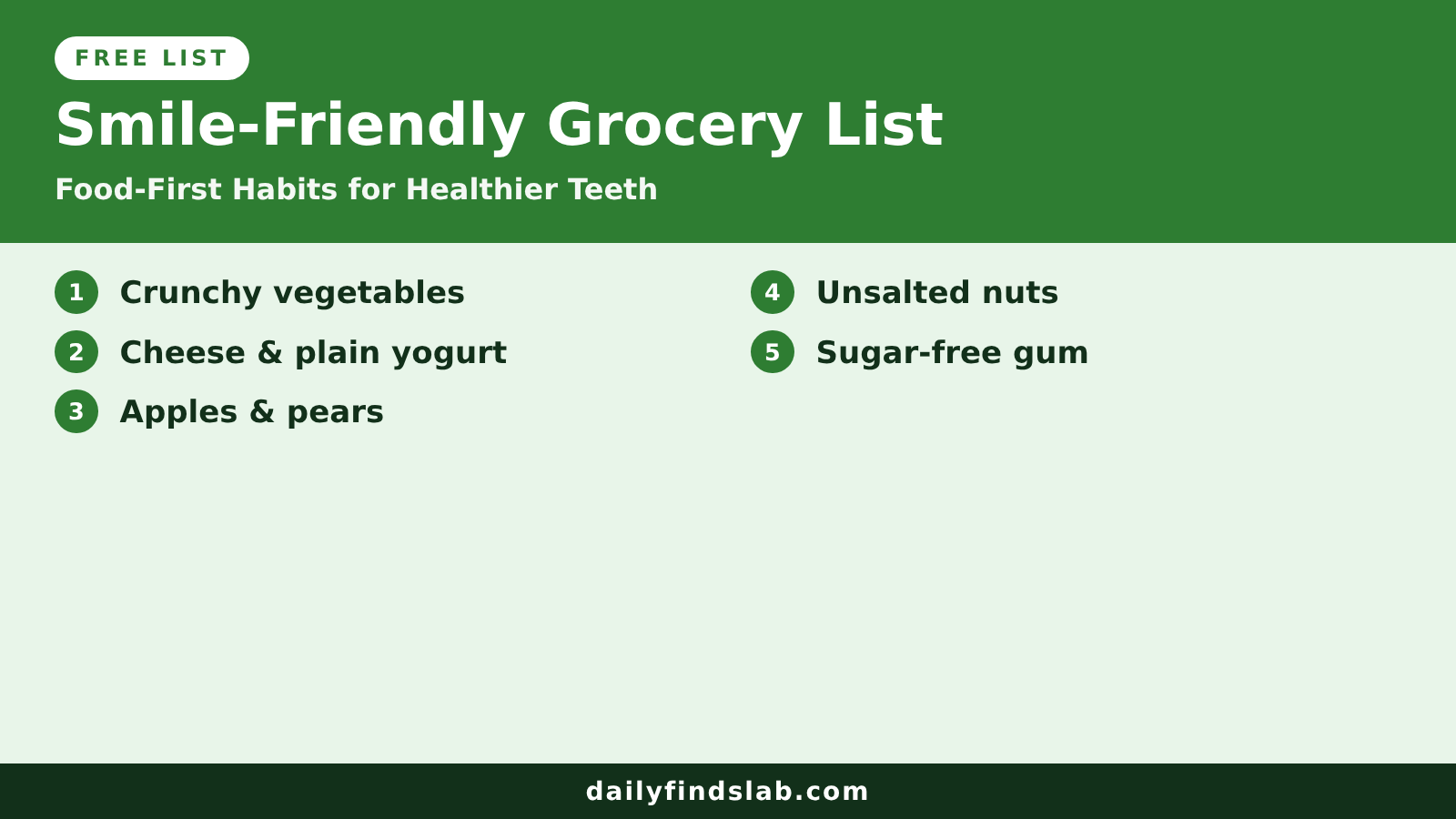
- Carrots, celery, cucumbers and snap peas
- Apples and pears (eat whole, then sip water)
- Plain Greek yogurt and cheese sticks
- Leafy greens like spinach and kale
- Almonds and other unsalted nuts
- Eggs, beans and lean proteins
- Green or black tea (unsweetened)
- Sugar-free gum
- Sparkling or still water
Common Smile Habits to Rethink
- Brushing too hard. A firm grip and hard bristles can be rough on gums. Hold the brush lightly.
- Skipping the gumline. Angle the brush toward the gums so bristles reach where teeth and gums meet.
- Using teeth as tools. Opening packages or bottles with your teeth can chip them.
- Sipping sweet coffee drinks all morning. Enjoy them, then switch to water.
- Waiting for pain before booking a cleaning. Regular checkups help catch things early.
- Keeping the same toothbrush for months. Set a reminder to swap it seasonally.
A Simple Weekly Smile Checklist
Use this as a quick Sunday reset, the same way you’d plan meals for the week:
- Restock floss, toothpaste and sugar-free gum.
- Prep a bag of cut vegetables for snacks.
- Wash your reusable water bottles.
- Check when your toothbrush was last replaced.
- Confirm your next dental appointment date.
What About Oral Probiotic Chews?
Some people add an oral probiotic chew to their routine as an extra step. One popular option is ProDentim. It isn’t a replacement for brushing, flossing or dental visits, and it isn’t meant to treat or prevent any condition. If you’re curious, we put together an honest look at what it is, who it may suit, the price and what to check before you buy.
Read our ProDentim honest review before you decide. Results vary, and it’s smart to ask your dentist before adding any supplement.
We may earn a commission from links on this page.
Frequently Asked Questions
How long should I brush my teeth?
The common recommendation is two minutes, twice a day, with fluoride toothpaste. A timer or electric toothbrush makes it easier to hit the full two minutes.
Should I floss before or after brushing?
Either works. What matters most is cleaning between your teeth once a day. Many people find flossing first makes brushing feel like the finishing step.
Is an electric toothbrush better than a manual one?
Both can work well when used correctly. Some people find an electric brush with a timer helps them brush longer and more gently.
What are the best snacks for a healthy smile?
Crunchy vegetables, cheese, plain yogurt, nuts and whole fruit with water are good everyday choices. Try to keep sugary snacks to mealtimes.
How often should I see a dentist?
Many people go for a checkup and cleaning about twice a year, but your dentist may suggest a different schedule based on your needs.
Do oral probiotics replace brushing?
No. Any supplement is at most an extra. Brushing, flossing, water and regular dental visits remain the foundation of a healthy smile routine.
The Bottom Line
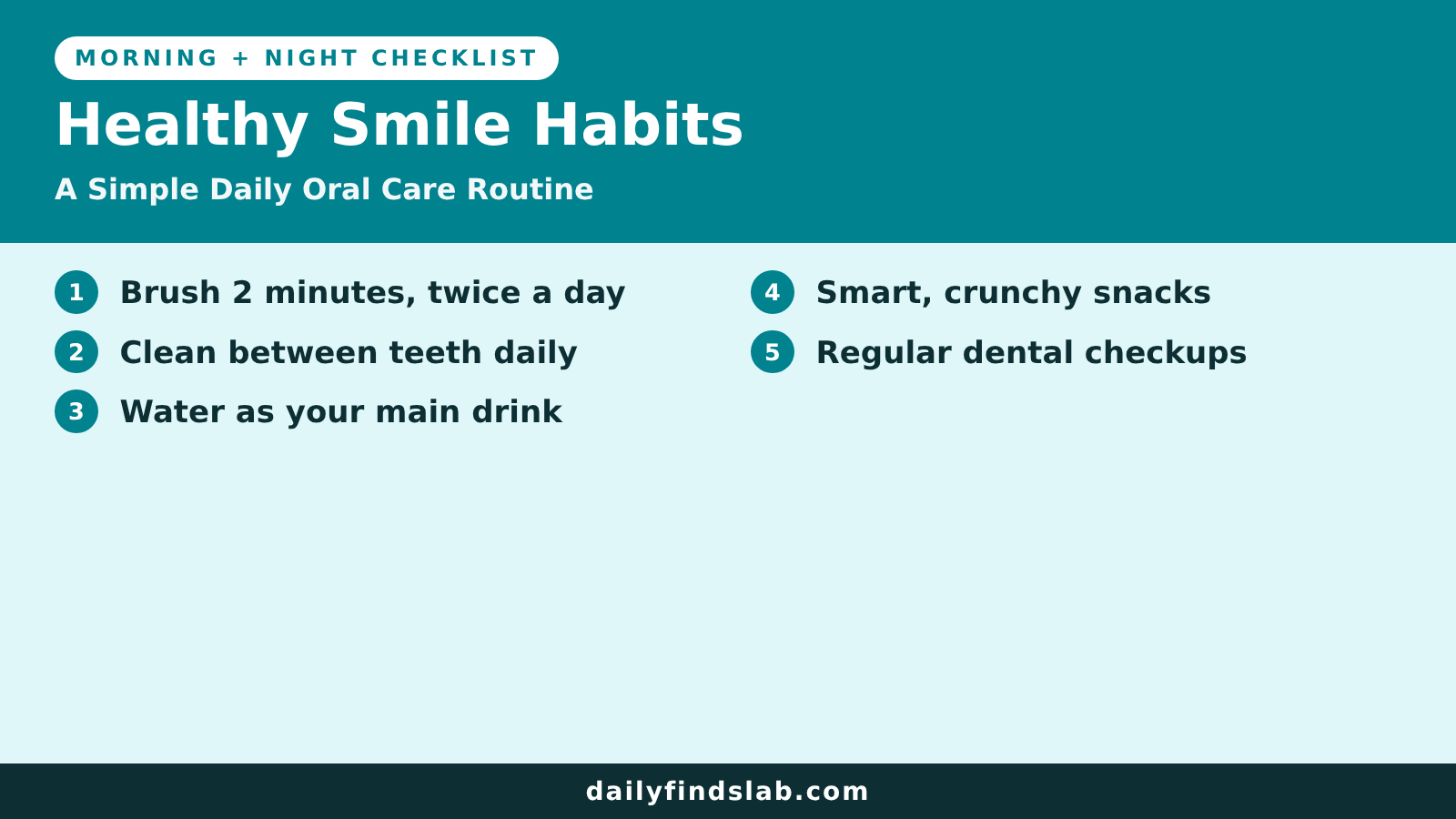
A healthy smile comes from a short routine done consistently: two minutes of brushing twice a day, cleaning between teeth once a day, water as your go-to drink, smart snacks, and regular dental visits. Set up your space, attach each step to a habit you already have, and save this checklist so it’s there when you need a reminder.